
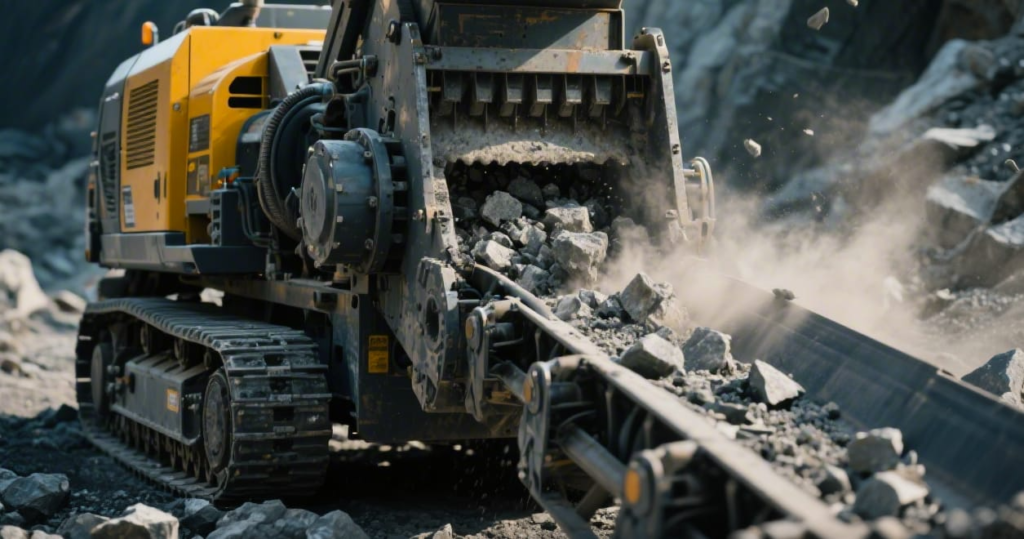
Construction and demolition projects generate enormous amounts of concrete waste every year. Traditionally, contractors had only two options – haul the material away to landfills or pay expensive disposal fees at recycling facilities. Today, however, many small contractors are discovering that concrete debris can become a valuable resource instead of a costly problem. With modern equipment such as a Rebel crusher, starting a concrete recycling business has become far more accessible than it was just a decade ago.
Instead of paying to dispose of concrete, contractors can crush it on-site and reuse or sell the resulting aggregate. This shift is transforming the economics of demolition and construction work. Small companies that adopt on-site concrete crushing can significantly reduce costs, create new revenue streams, and build a more sustainable operation.
This article explains how contractors can start a profitable concrete recycling business, what equipment is required, and how to turn construction waste into a reliable source of income.
Why Concrete Recycling Is Becoming a Major Opportunity
Concrete is one of the most widely used construction materials in the world. Roads, bridges, foundations, sidewalks, parking lots, and buildings all rely on it. When these structures are demolished or renovated, large quantities of concrete are produced as waste.
Traditionally, contractors paid dump trucks to haul this material to landfills or recycling yards. Those disposal costs have increased dramatically in recent years. Landfill tipping fees, fuel costs, trucking labor, and environmental regulations have made waste disposal one of the biggest expenses on demolition projects.
At the same time, the demand for recycled aggregate is growing. Crushed concrete can be reused for:
- road base
- drainage layers
- construction fill
- parking lot foundations
- landscaping projects
- backfill for utilities
Because recycled aggregate often costs less than newly mined stone, contractors and developers increasingly prefer it. This combination of high disposal costs and rising demand for recycled materials creates a strong business case for construction waste recycling equipment.
How Small Contractors Can Turn Concrete Waste Into Profit
A contractor running demolition jobs already has access to the most important raw material – concrete debris. Instead of paying to remove it, the material can be processed directly on the job site.
This is where on-site concrete crushing becomes valuable.
Using a mobile crusher, broken concrete is fed into the machine where it is crushed into smaller aggregate sizes. The crushed material can then be reused immediately or stockpiled for later use.
The financial benefits are significant.
Instead of paying:
- trucking costs
- landfill fees
- disposal labor
contractors can produce reusable aggregate directly from the waste they generate.
In many cases, contractors discover that the recycled material has value beyond their own projects. Local builders, landscapers, and road contractors frequently purchase recycled aggregate at competitive prices. This creates an additional revenue stream that can quickly transform waste into profit.
Equipment Needed to Start a Concrete Recycling Business
Starting a concrete recycling business does not require a large industrial facility. Many contractors begin with a simple mobile setup that can move from job site to job site.
The most important piece of equipment is a crusher.
A mobile concrete crusher for sale is designed to break down concrete into usable aggregate. These machines are often mounted on tracks or trailers, allowing them to operate directly at demolition sites.
Typical equipment used in a small recycling operation includes:
Mobile Crusher
The crusher breaks large pieces of concrete into smaller, usable material. Compact crushers are ideal for contractors because they are easier to transport and require less space to operate.
Screening Equipment
Screens separate crushed material into different sizes. This allows contractors to produce multiple aggregate products from the same material.
Excavator or Loader
Heavy equipment is needed to feed concrete into the crusher and move processed material into stockpiles.
Conveyors
Conveyors help move crushed material efficiently and reduce manual labor.
For small operations, the combination of a mobile crusher and basic screening equipment is usually enough to begin processing material and generating revenue.
The Advantages of On-Site Concrete Crushing
One of the biggest advantages of on-site concrete crushing is the reduction of transportation costs.
Concrete is heavy. Hauling it off-site requires multiple truckloads, fuel, drivers, and time. By processing the material directly at the demolition site, contractors eliminate much of that expense.
Other advantages include:
Lower Dump Fees
Instead of paying landfill tipping fees, contractors can recycle the material themselves.
Faster Project Completion
Removing debris and bringing in new base material can take days. Crushing concrete on-site allows projects to move faster.
Reduced Environmental Impact
Recycling concrete reduces landfill waste and decreases the need for quarry mining.
Additional Income Opportunities
Contractors can sell excess crushed material to other construction companies.
These advantages make construction waste recycling equipment increasingly attractive for contractors looking to improve profitability.
How Much Revenue Can Concrete Recycling Generate?
The profitability of a concrete recycling business depends on several factors:
- the amount of demolition material available
- local demand for recycled aggregate
- equipment efficiency
- transportation costs
However, the economics often favor recycling.
For example, a contractor might pay significant landfill fees per ton of concrete. By crushing that material instead, the contractor avoids those fees and produces aggregate that can be sold or reused.
Even when recycled aggregate is sold at a lower price than newly quarried stone, the margins can still be strong because the raw material was essentially free.
Many contractors start recycling simply to reduce dump fees. Over time, they discover that the recycled material itself becomes a profitable product.
Finding Customers for Recycled Concrete
Once contractors begin producing crushed concrete, the next step is finding buyers.
Fortunately, recycled aggregate has many applications in construction and landscaping. Potential customers include:
- road construction companies
- excavation contractors
- landscaping businesses
- concrete contractors
- property developers
- municipalities
Because recycled concrete is often cheaper than quarried stone, it is an attractive option for projects that require large volumes of base material.
Local advertising, contractor networks, and online listings can help connect recycling operations with potential buyers.
Permits and Regulations
Before starting a concrete recycling business, contractors should research local regulations. Requirements vary depending on location, but they may include:
- environmental permits
- zoning approvals
- noise regulations
- dust control requirements
- material handling permits
In many areas, mobile crushing operations have fewer regulatory requirements than permanent recycling facilities, which makes them ideal for small contractors.
Scaling the Business Over Time
Many successful recycling operations begin small.
A contractor might start by crushing material from their own demolition projects. As experience grows and equipment becomes more efficient, the business can expand.
Possible growth opportunities include:
- offering crushing services to other contractors
- processing asphalt and other materials
- operating a dedicated recycling yard
- selling multiple aggregate products
With the right equipment and consistent demand, a small recycling operation can grow into a significant part of a contractor’s business.
The Future of Construction Recycling
The construction industry is rapidly changing. Rising landfill costs, environmental regulations, and sustainability goals are pushing contractors to find better ways to handle demolition waste.
Recycling concrete is no longer just an environmental choice. It is a practical business strategy that can reduce costs and create new revenue opportunities.
For small contractors willing to invest in construction waste recycling equipment, the opportunity is substantial. With access to the right machinery, a reliable supply of material, and local demand for recycled aggregate, starting a concrete recycling business can become one of the most profitable expansions a contractor can make.
By embracing on-site concrete crushing and modern mobile equipment, contractors can transform construction waste into a valuable resource and build a more efficient, sustainable operation for the future.

